
September 16, 2026
Pipeline Right-of-Way Vegetation Management in Alberta: What Oil and Gas Operators Need to Know
You’re managing a pipeline corridor that hasn’t had a proper vegetation cut in a few years. The brush is chest-high. Your patrol crew is flagging encroachment on the right-of-way markers. And you know an inspection is coming.
That’s not a maintenance problem anymore. That’s a liability problem.
This is what pipeline right-of-way vegetation management actually looks like on the ground in Alberta. Get it wrong, and it costs more than a cut.
Pipeline right-of-way vegetation management is one of the most spec-driven jobs in Alberta’s oil and gas sector. It’s also one of the most operationally sensitive. Get it wrong, and you’re looking at regulatory exposure, patrol access problems, and inspections that drag on.
So this guide covers four things. What ROW vegetation management actually involves. How to think about clearing methods. What Alberta’s compliance picture looks like. And how to qualify a contractor who can actually do the work.
What Pipeline ROW Vegetation Management Covers
A right-of-way is the designated strip of land that a pipeline operator controls for inspection, maintenance, and emergency access. Vegetation management on that corridor isn’t optional.
It’s an operational requirement under Alberta’s Pipeline Act (R.S.A. 2000, c. P-15) and the regulatory framework administered by the Alberta Energy Regulator (AER). In practice, ROW vegetation work falls into two categories.
Initial Clearing: New Pipeline Construction
When a new pipeline goes in, the corridor needs to be cleared from scratch. That usually means heavy boreal bush in northeastern Alberta: dense stands of poplar, spruce, birch, and willow, often on wet or frost-susceptible ground.
So initial clearing is a single large mobilization with a defined scope and a tight construction schedule.
The clearing method here matters a lot. Push-and-pile is the legacy approach: a dozer or excavator knocks trees down and piles the debris for burning. It works. But it disturbs the topsoil layer significantly, creates burn-pile debris obligations, and leaves the right-of-way rougher.
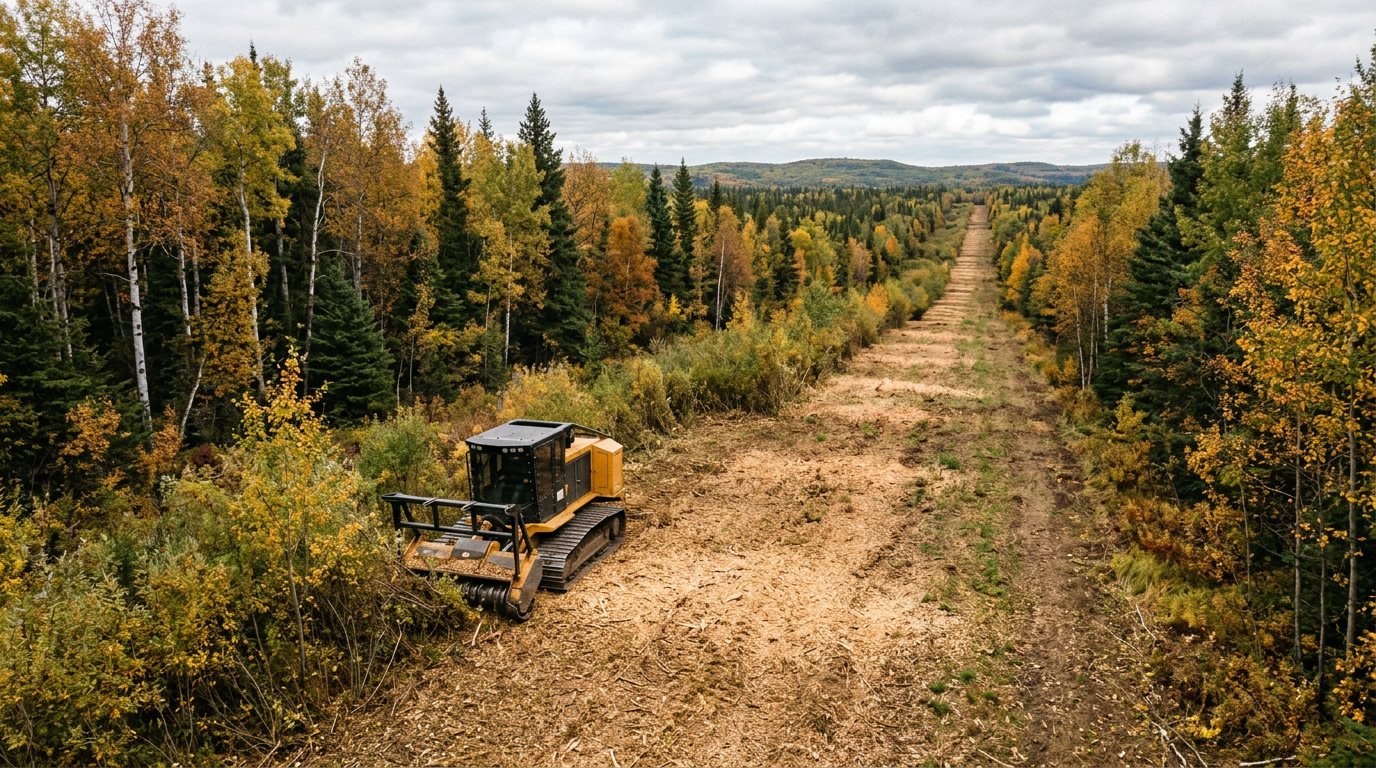
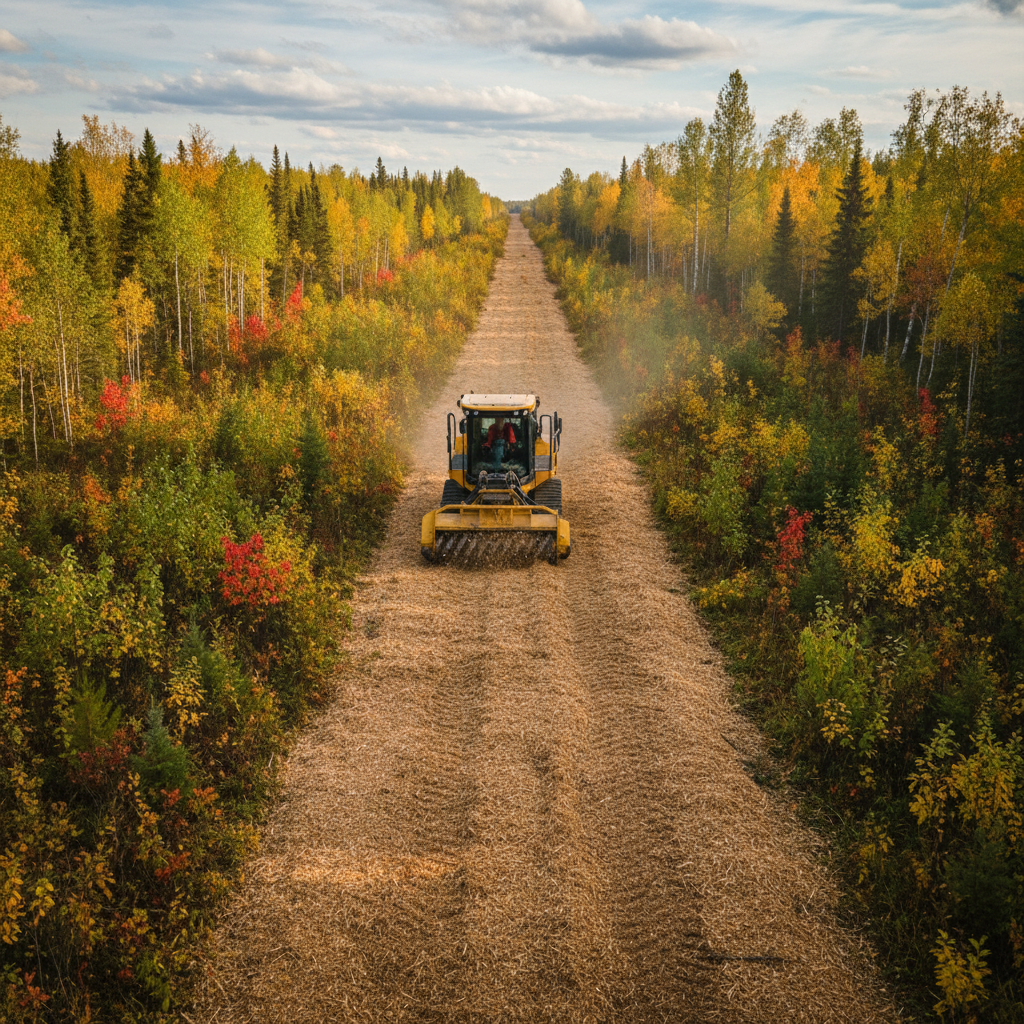
Mulching is the alternative. A high-horsepower tracked mulcher runs through the corridor and grinds the cleared material into a chip mat that stays on site. There are no debris piles to manage. Topsoil disturbance is lower, too, and the ground surface recovers faster after clearing.
Ongoing Maintenance Clearing
This is the bigger volume of work for most operators. Once the pipeline is in the ground, the corridor needs periodic maintenance cuts.
That keeps vegetation from encroaching on the pipe. It maintains patrol access. And it meets the monitoring requirements set by the Alberta Energy Regulator (AER).
Maintenance intervals vary by pipeline, ground cover and operator policy. In the boreal zone of northeastern Alberta, aspen and willow regrowth is fast, so most corridors need a cut every few years. Wet stretches with aggressive willow can need attention more often.
Utilities managing their own corridors work the same way. ATCO’s vegetation management plan schedules work based on how fast the target vegetation grows in each zone, confirmed by annual inspections.
Maintenance clearing is typically lighter work than initial clearing. But it still demands proper equipment. A mulcher moving through a few years of boreal regrowth is often dealing with stands well over head height, and trunks that will wear out an underpowered machine fast.
Why Vegetation Control Matters for Pipeline Integrity
The relationship between vegetation and pipeline safety isn’t just about access. It’s also about what happens underground when a corridor is poorly maintained.
How a corridor gets cleared matters underground too. Ground disturbance near pipelines is regulated under the Pipeline Act.
The AER’s pipeline performance reporting still lists contact damage during ground disturbance as an important focus area, with 21 such incidents in 2025. In short, a clearing method that grinds vegetation at the surface, instead of pushing, digging and piling, keeps the risk to the pipe down.
On the patrol and inspection side, an overgrown ROW means your aerial patrol crew can’t visually confirm ground condition. Your ground patrol crew ends up fighting through brush to reach inspection points. Both problems create reporting gaps.
Operators are responsible under the Pipeline Act (R.S.A. 2000, c. P-15) and the AER’s rules for keeping their pipelines safe to operate, inspect and protect from damage. An overgrown corridor makes all of that harder to show.
And that’s exactly the kind of thing that gets noticed in an audit or an integrity review.
Mulching vs. Push-and-Pile for ROW Work
If you’re evaluating clearing methods for a ROW project, this comparison matters.
Push-and-pile uses dozers, excavators, or feller-bunchers to knock and pile trees, followed by either burning the debris or chipping it for removal. It’s fast for initial large-volume clearing, especially where ground disturbance is acceptable because reclamation is happening anyway.
But the downsides add up. Burn-pile permits. Debris management obligations. Significant topsoil disturbance. And a corridor that takes longer to stabilize.
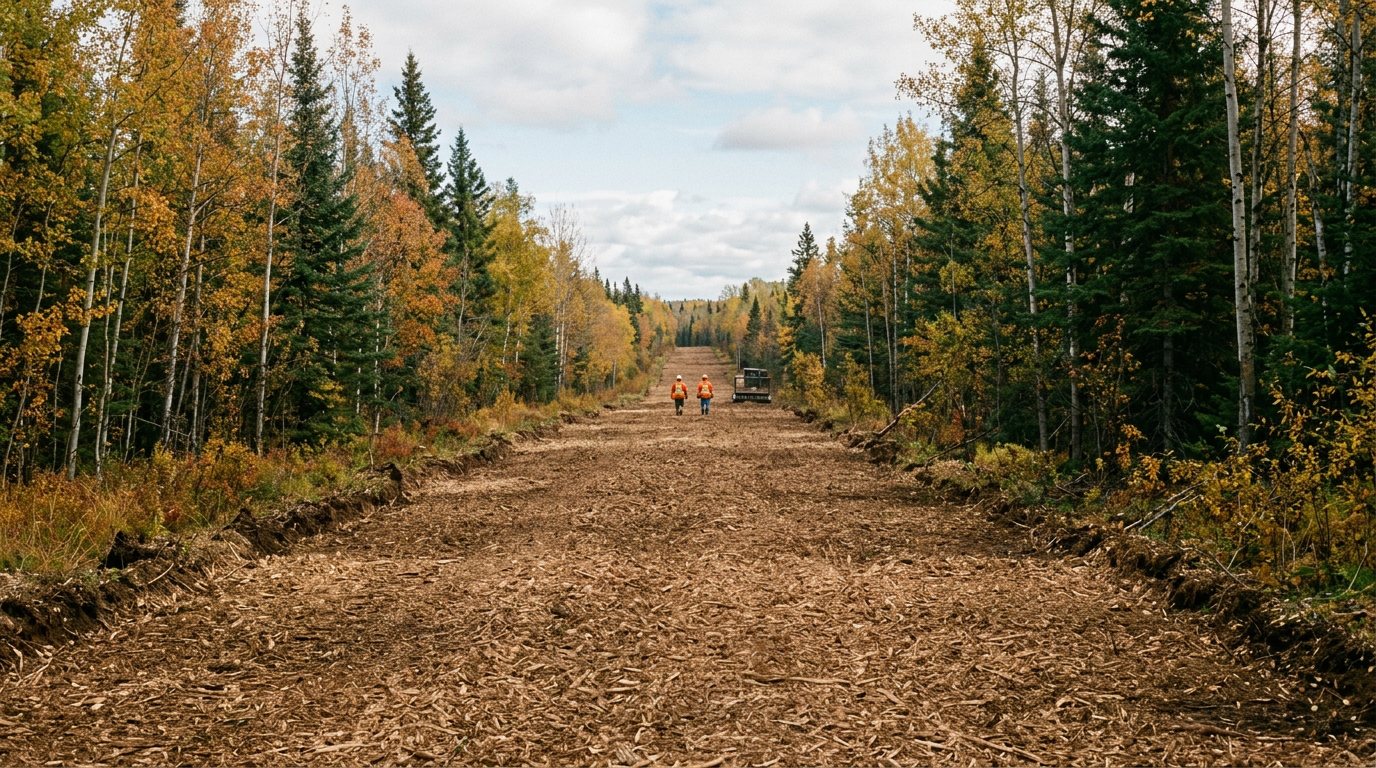
Mulching uses a tracked machine with a high-horsepower mulching head to grind all stems, branches, and trunks into a chip mat directly on the ground surface. The material stays on site.
There are no burn permits and no debris windrows. Ground disturbance is minimal, because the tracked unit distributes its weight across a larger footprint than dozer tracks.
In fact, the chip mat actually helps stabilize the corridor surface and reduces erosion on sloped terrain.
For maintenance clearing specifically, mulching is almost always the better method. You’re not doing a full reclamation, and you don’t want significant ground disturbance. You need the corridor back in service condition quickly.
That said, production depends heavily on regrowth density and terrain. So ask any contractor for rates on ground similar to yours.
For the boreal bush of northeastern Alberta, ground conditions range from firm to marginal, and wet seasons compress your access window. So the lower ground pressure of a tracked mulching unit is a real practical advantage over heavier wheeled or wide-tracked dozer equipment.
Contractor Qualification for Oil and Gas ROW Work
This is where a lot of operators run into problems. Not every land clearing contractor can legally work on an oil and gas right-of-way in Alberta.
The qualification requirements are real, and the major pipeline operators enforce them.
COR Certification
The Certificate of Recognition (COR) is Alberta’s occupational health and safety certification program. It’s administered through the Alberta Construction Safety Association (ACSA) and other certifying partners under the Alberta government’s OHS framework.
A COR is earned through an external audit of a company’s health and safety program. It’s kept up with internal maintenance audits in between. And it’s renewed with another external audit every three years (ACSA, COR process).
For oil and gas work in Alberta, COR is not optional. Most major pipeline operators and utilities require COR certification as a baseline qualification for contractors on their approved vendor lists.
In fact, a contractor without COR certification typically cannot be added to an approved vendor list at all. So when evaluating any contractor for ROW work, ask which certifying partner holds their COR certificate. Then request the certificate number so you can verify it directly with the issuing body.
ISNetworld, ComplyWorks, and Avetta
Beyond COR, the major pipeline operators use third-party contractor management platforms to pre-qualify vendors and manage ongoing compliance.
The three most common in Alberta are ISNetworld, ComplyWorks, and Avetta. These platforms aggregate a contractor’s safety records, insurance certificates, certifications, and incident history in one place. That lets an operator’s procurement team verify contractor qualification before approving work.
If a contractor isn’t registered and in good standing on the platform your company uses, the administrative friction of getting them approved can take longer than the project itself.
That’s not a theoretical concern, either. It’s a common reason why project timelines slip when an operator brings in an unqualified contractor at the last minute.
So when evaluating contractors, ask which of these platforms they are currently registered on. Then confirm their standing directly through the platform. A contractor who is active and in good standing on the platform your company uses can typically move through vendor qualification quickly with most major operators in Alberta.
Insurance and Liability
ROW work on a pipeline corridor requires contractors to carry commercial general liability and equipment insurance at levels that reflect the exposure. Confirm the minimums your contract requires, including any pollution liability. And ask for a current certificate of insurance before mobilization.
Typical Project Scopes in Northeastern Alberta
Most ROW vegetation management projects in the Bonnyville, Cold Lake, and Lac La Biche areas fit into a few common patterns.
Annual or biennial maintenance corridors in riparian zones. This is especially true along tributaries of the North Saskatchewan River system, and around Cold Lake and Lac La Biche, where willow and alder regrowth is aggressive. These corridors are usually cleared in segments on a rotating schedule.
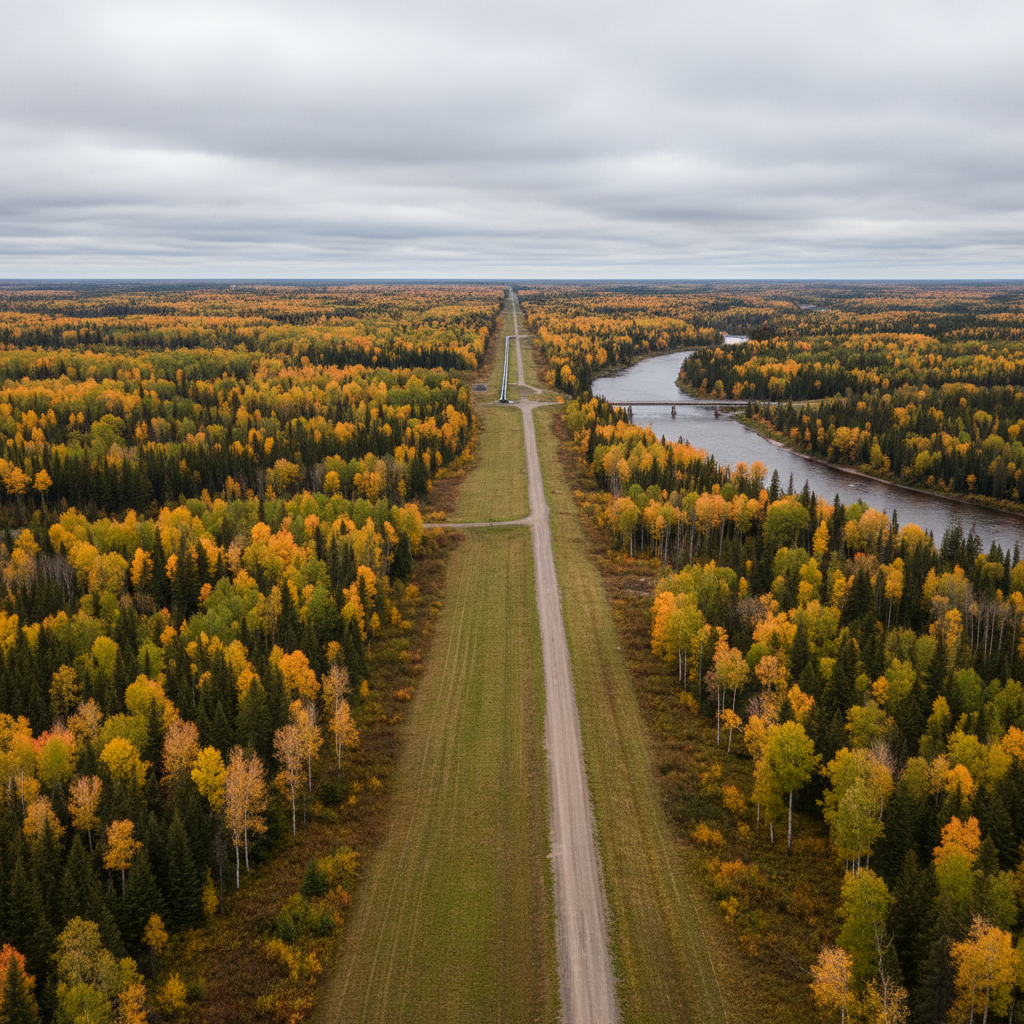
Post-construction restoration cuts on corridors where initial clearing left rough conditions, or where reclamation seeding has been outcompeted by pioneer brush species.
Access road and ROW intersection clearing, where forestry roads or lease roads cross the pipeline corridor and brush has grown in to create patrol access problems.
Emergency access clearance after fire or blowdown events in the boreal zone, where standing snags or downed material on the ROW creates hazard conditions.
Most of the pipeline corridor work in northeastern Alberta runs from late spring through fall. That said, some operators schedule winter clearing specifically for wet terrain, where frozen ground access is preferred.
And since we mobilize from a Bonnyville-area base, most NE Alberta ROW segments are reachable without long equipment hauls.
What to Ask When Qualifying a ROW Clearing Contractor
If you’re evaluating contractors for pipeline ROW vegetation management in Alberta, these are the questions that matter.
Are you COR certified, and which certifying partner holds your certificate? Can you provide the certificate number for verification?
Are you registered on ISNetworld, ComplyWorks, and/or Avetta? Which platforms, and what is your current standing status?
What is your equipment capability for ROW mulching? Specifically: horsepower range and tracked unit ground pressure.
What is your experience with boreal bush clearing in northeastern Alberta? Can you provide operator references from ROW projects?
What are your typical production rates for maintenance clearing versus initial clearing in comparable vegetation types?
How do you handle wet terrain access and seasonal restrictions? And what are your insurance coverages and limits?
A contractor who can answer all of those questions with documentation is ready to work on a pipeline ROW. A contractor who hedges on certification, or can’t provide platform registration details, is not.
FAQ
How often does a pipeline right-of-way need vegetation maintenance in Alberta?
Most boreal-zone corridors in northeastern Alberta need a maintenance cut every two to four years. Riparian stretches with aggressive willow and cottonwood re-growth, particularly around Cold Lake and Lac La Biche, can push that to an annual or biennial cycle.
Your specific interval should be set by ground cover type, pipeline class, and your operator’s monitoring policy. Not a generic calendar.
What’s the difference between mulching and traditional push-and-pile clearing for ROW work?
Push-and-pile uses a dozer or excavator to knock and pile trees, which then have to be burned or hauled off. Mulching uses a tracked machine with a high-horsepower head to grind everything into a chip mat that stays on the ground.
For maintenance clearing specifically, mulching wins on nearly every count. No burn permits. Less topsoil disturbance. A faster return to service condition. And lower ground pressure on marginal terrain.
Do I need a COR-certified contractor for pipeline ROW vegetation management?
For work on an active pipeline right-of-way, yes, in practice. Most major operators in Alberta require COR certification as a baseline for their approved vendor list, and many also require registration on ISNetworld, ComplyWorks, or Avetta.
A contractor without those credentials typically can’t get approved to mobilize on the corridor, regardless of price or equipment.
Can ROW vegetation clearing be done on frozen ground, or does it require summer access?
Both are viable, and the right window depends on terrain. Frozen-ground winter access is often preferred on wet or marginal soils, because a tracked mulching unit leaves minimal disturbance compared to the same equipment on thawed ground.
Most ROW work in northeastern Alberta runs late spring through fall. But operators with wet-terrain segments frequently schedule winter clearing specifically to protect the ground.
What happens if overgrown vegetation is flagged during an AER audit or integrity review?
An overgrown corridor makes it hard to show the line can be properly inspected and protected. It can lead to corrective action, and it carries real safety risk, because it blocks aerial and ground patrol visibility.
The practical fix is the same either way: get the corridor back to a compliant, inspectable condition with a qualified crew, and keep the maintenance cycle from lapsing again.
Pevach Corp’s ROW Capability
Pevach Corp has been doing pipeline and utility right-of-way work in northeastern Alberta for years, operating out of Bonnyville.
The company holds COR certification through the Alberta Construction Safety Association (ACSA) and is registered on ISNetworld, ComplyWorks, and Avetta. These are the main contractor management platforms Alberta pipeline operators use to qualify ROW crews.
The fleet includes 275 to 300 horsepower mulchers with a 106.9-inch cutting head and 3.2 psi ground pressure, suited to the varied terrain across the Lakeland and Lloydminster corridors.
If you’re managing pipeline ROW vegetation in northeastern Alberta and need a qualified crew, get in touch. You can reach the Pevach team through pevachcorp.com for a project discussion or quote request.
