
February 12, 2026
Fuel Breaks and FireSmart Mulching: Protecting Industrial Sites and Acreages From Wildfire in Northeastern Alberta
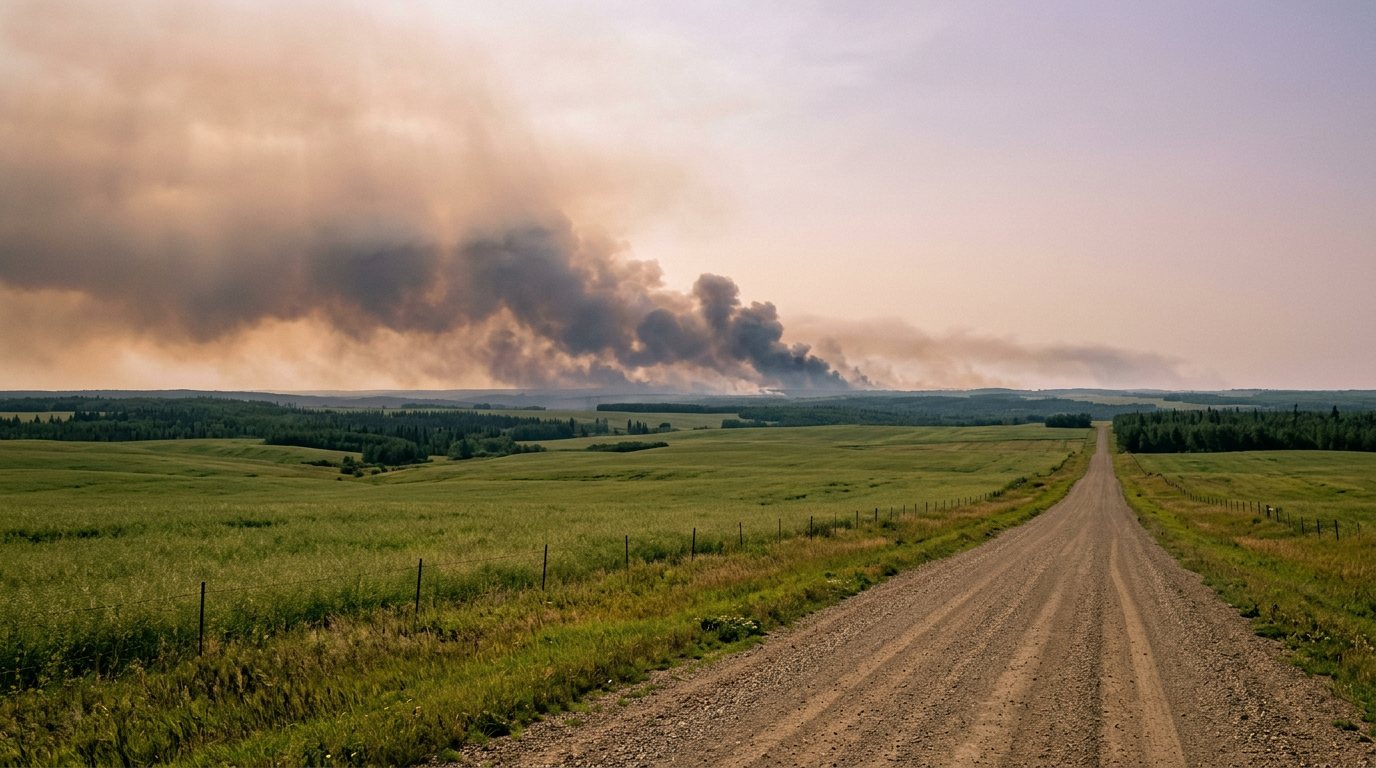
Anyone who lived through the last few fire seasons around here doesn’t need convincing. The smoke, the evacuation alerts, the nights watching the fire map. Wildfire is part of life in the boreal forest, and it’s not getting any quieter. Fuel breaks and FireSmart mulching are two of the most effective tools we have for changing what a fire finds when it gets here.
The numbers back that up. In 2023, Natural Resources Canada reports that more than 6,800 wildfires burned over 14.6 million hectares of Canada’s forest, against a yearly average of about 2.1 million hectares. More than 230,000 people were evacuated. Closer to home, the Government of Alberta reported 246 wildfires burning 78,207 hectares in the Lac La Biche Forest Area between January 1 and late October 2025.
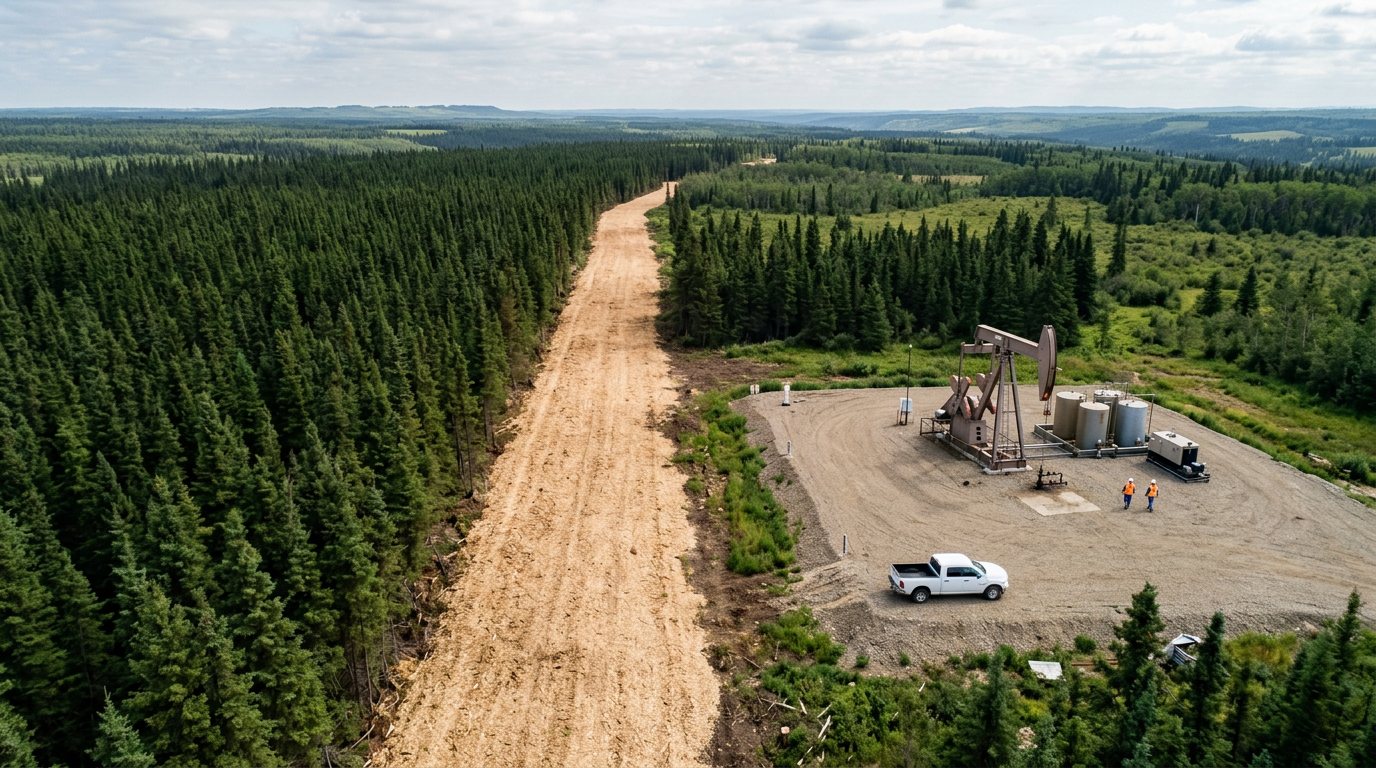
You can’t stop fire from happening in the bush. What you can do is change what’s growing around the things you care about, so a fire has less to burn when it gets there. That’s what fuel breaks and FireSmart vegetation work are about, and it’s work we do every year for industrial sites, communities and acreage owners across the Lakeland.
What a Fuel Break Actually Does
A fuel break is a strip of land where the vegetation has been removed or reduced so a fire has less to burn. It won’t stop a big crown fire driven by wind, and nobody honest will tell you it will. What it does is slow a fire down, drop it out of the treetops onto the ground where it’s easier to fight, and give fire crews a place to make a stand.
The research on this is getting more specific. A 2025 study in PLoS One looked at fuelbreak layouts in the Red Rock-Prairie Creek area of northwestern Alberta and found that the best-placed network of fuelbreaks cut the potential for large fire spread to about 58 percent of what it was untreated. Where the breaks go matters as much as how many there are. In that study, the most effective breaks ran across the prevailing wind.
We covered the basics a few years ago in our post on how a firebreak can help stop the spread of a forest fire. This post goes further into industrial sites, the rules and the funding.
FireSmart in Plain Terms
FireSmart is the national program for reducing wildfire risk around homes, communities and infrastructure. The vegetation side of it covers a few kinds of work. The Forest Resource Improvement Association of Alberta (FRIAA) describes it as changing the wildland fuels around a site through:
- Fuel breaks
- Thinning and pruning
- Removing or reducing vegetation
- Converting to more fire-resistant species
For a home or acreage, FireSmart breaks the area around the house into zones. Parkland County’s FireSmart guide lays them out like this:
- 0 to 1.5 metres: clear out leaves, needles, firewood, mulch and anything else that burns from around the house, steps and deck.
- 1.5 to 10 metres: keep grass short, clean up branches and dry growth, and move firewood away from the house.
- 10 to 30 metres: thin and space trees, prune lower branches, remove ladder fuels and clean up deadfall, needles and dry grass.
Two numbers from that guide are worth remembering: space evergreen crowns at least 3 metres apart, and prune lower branches up to 2 metres off the ground so fire can’t climb from the grass into the trees.
Industrial Sites: The Rules You’re Already Working Under
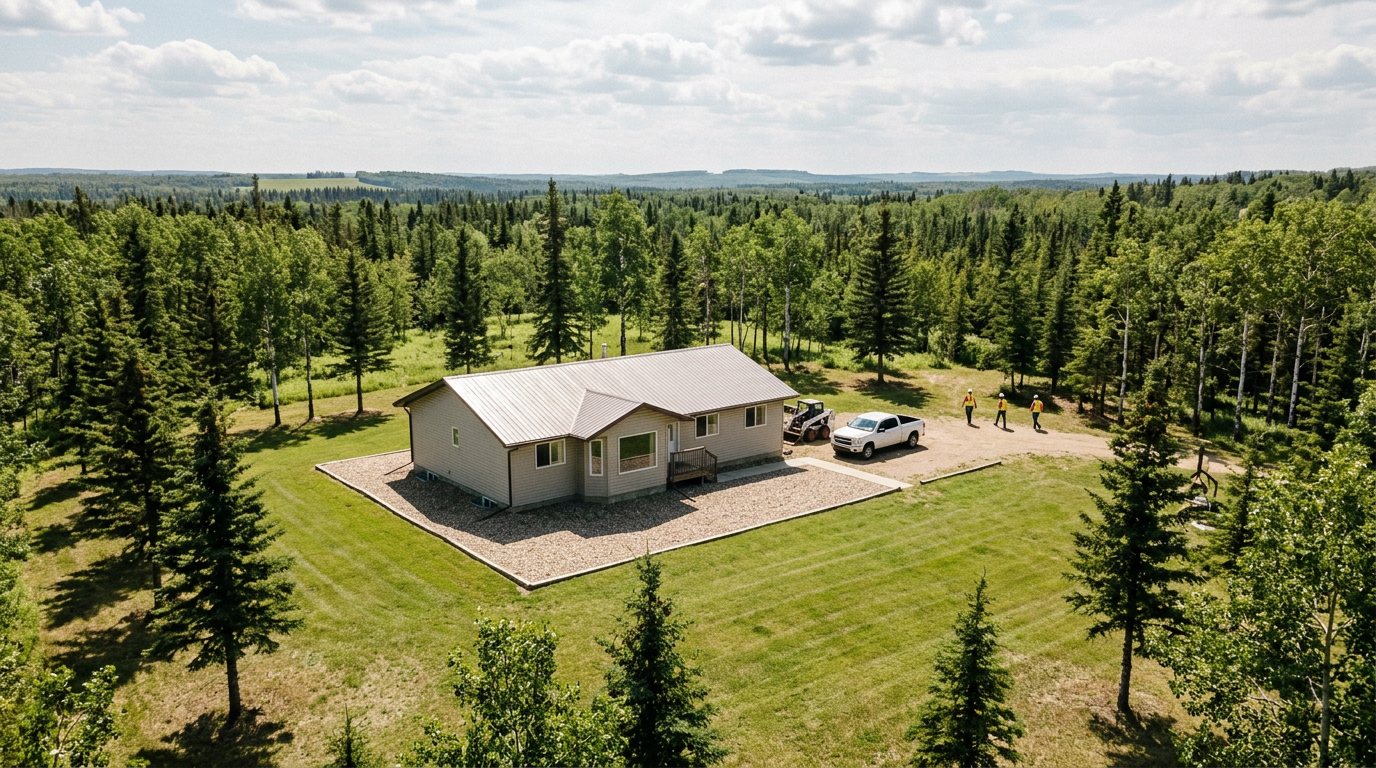
If you run a well site, a camp or a facility out in the bush, wildfire planning isn’t optional.
Industrial Wildfire Control Plans. Under Alberta’s Forest and Prairie Protection Act, an Industrial Wildfire Control Plan (IWCP) is required for facilities on or within one kilometre of public land that have at least one person on site for four or more hours a day, from March 1 to November 30. That’s from the province’s IWCP user manual, which says the goal of the program is to protect human life.
Fire permits. From March 1 to October 31, you need a fire permit for any burning in Alberta’s Forest Protection Area other than a campfire. The permits are free, and burning without one can bring fines of up to $600. That matters if your plan for cleared brush is a burn pile.
Industry guidance. The Government of Alberta’s FireSmart page points industry to the FireSmart Guidebook for the Oil and Gas Industry and the Alberta Electrical Utility Wildfire Risk Best Management Practices.
A plan on paper is only as good as what’s actually growing around the site. A lease surrounded by dense black spruce right up to the fence line is a lot harder to defend than one with a cleared, maintained buffer.
Why Mulching Works So Well for Fuel Breaks
There are a few ways to build a fuel break. You can knock trees down with a dozer and burn the piles. You can hand-cut and leave the slash. Or you can mulch.
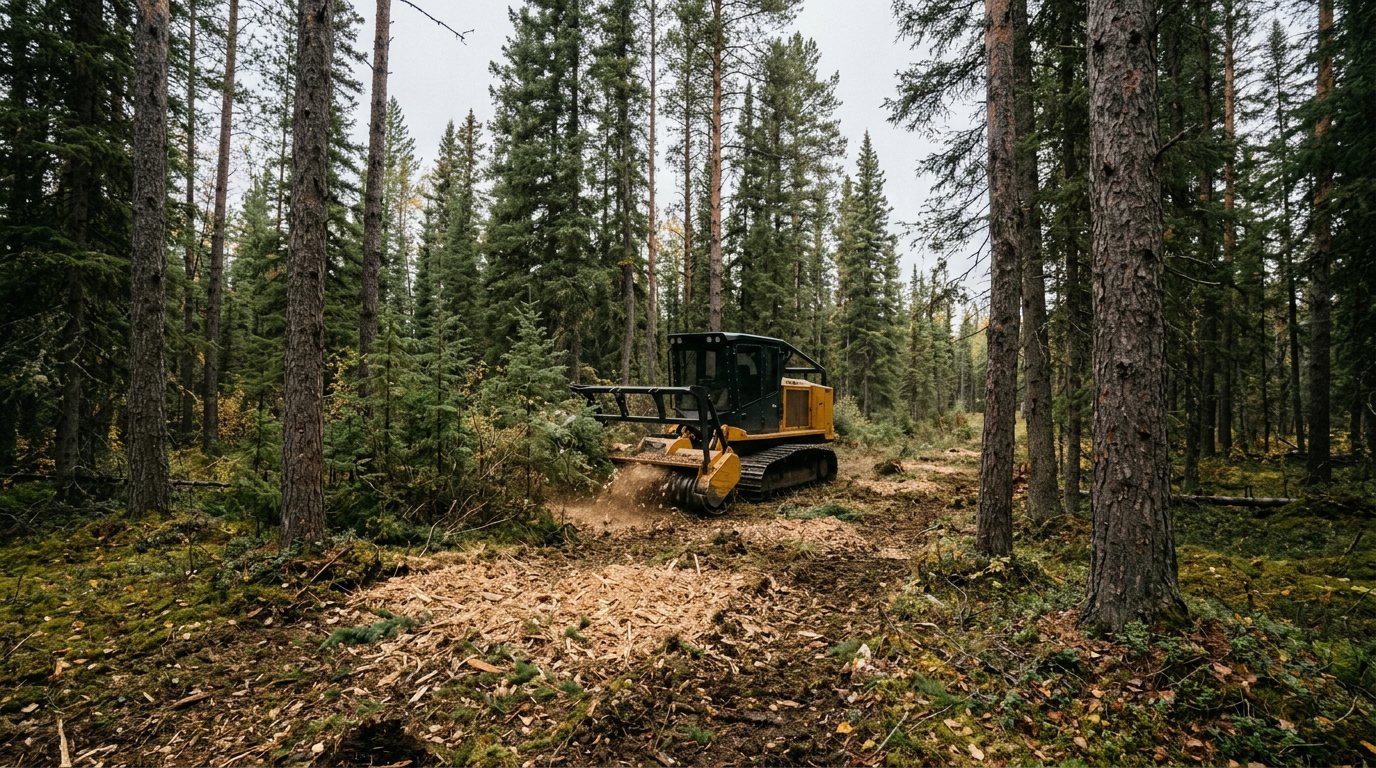
For most fuel break work in the boreal forest, mulching is the best fit, for one simple reason: it doesn’t leave piles of fuel behind. Hand cutting dense regrowth leaves heaps of slash that dry out and become exactly the fuel you were trying to remove. Burning piles means permits, the right weather and someone watching the fire. Mulching grinds trees and brush into a chip layer that lies flat on the ground.
ATCO makes the same point about its own corridors. Its vegetation management plan prefers mulching where cutting trees any other way would leave debris that breaks fuel management standards or Alberta’s wildfire rules.
Mulching is also selective when it needs to be. A good operator can take out the brush and small spruce underneath while leaving the larger, healthier trees standing with space between them. That’s FireSmart thinning, and it’s a lot less of a shock to a property than clear-cutting it. We go into the trade-offs in burning vs professional tree slashing.
Funding for Community Fuel Breaks
If you’re a county, MD, First Nation or Métis Settlement looking at fuel breaks around a community, there’s money available.
The FRIAA FireSmart program funds fuel breaks, thinning, pruning and vegetation removal. Priority goes to Alberta communities and municipalities, First Nations, Métis Settlements and Locals, according to FRIAA. From 2013 to March 31, 2026, the program funded 672 FireSmart projects, paid out $57 million and completed more than 6,000 hectares of fuel modification.
If you’re putting together an application, it helps to have a contractor who has done this kind of work involved early, so the scope and cost estimate in the application are realistic.
FireSmart’s Seven Disciplines: Where Vegetation Work Fits
FireSmart isn’t only about clearing brush. The national program breaks the work into seven disciplines: inter-agency cooperation, public education, vegetation management, legislation, development considerations, emergency planning and cross-training. The fuel breaks and thinning covered in this post sit inside vegetation management, which is one piece of a bigger picture.
That matters if you’re putting together a funding application. A submission that only covers mulching a fuel break reads differently than one that also touches public education or emergency planning, even if the on-the-ground work is identical. FRIAA’s own numbers show the scale of what’s already been built this way: more than 550 community FireSmart plans developed and over 6,000 hectares of fuel modification completed since 2013, alongside the $57 million paid out across 672 funded projects noted above. For a municipality or First Nation building an application, the strongest submissions tend to tie the vegetation work into that bigger FireSmart framework rather than treating it as a standalone brush-clearing job.
When to Do the Work
Timing a fuel break project comes down to ground conditions and fire risk.
- Late fall and winter are often the best windows. Frozen ground carries equipment with less damage, and fire danger is low while the work is under way.
- Early spring, before the March 1 start of fire season, is the last good chance to get a site ready for the year.
- Summer work is possible, but it needs care. Running a mulcher in dry conditions carries its own fire risk, and the crew needs to follow whatever fire restrictions are in place at the time.
Fuel breaks also need upkeep. Aspen and willow come back fast after clearing, so plan on maintenance every few years to keep the break doing its job.
FAQ
What is a fuel break?
A fuel break is a strip of land where trees and brush have been removed or thinned so a wildfire has less to burn. It slows a fire, drops it to the ground and gives firefighters a safer place to work. It doesn’t guarantee a fire will stop.
Do industrial sites in Alberta need a wildfire plan?
Yes, many do. An Industrial Wildfire Control Plan is required under the Forest and Prairie Protection Act for facilities on or within one kilometre of public land with at least one person on site for four or more hours a day, from March 1 to November 30.
Is mulching better than burning brush piles for a fuel break?
In most cases, yes. Mulching leaves chips lying flat on the ground instead of piles of dry fuel. It also avoids the permits and weather windows that burning needs, which in Alberta’s Forest Protection Area means a fire permit from March 1 to October 31.
How far apart should trees be for FireSmart?
FireSmart guidance from Parkland County says to space evergreen crowns at least 3 metres apart in the zone 10 to 30 metres from your home, and to prune lower branches up to 2 metres off the ground.
Is there funding for community fuel breaks in Alberta?
Yes. The FRIAA FireSmart program funds fuel breaks, thinning and vegetation removal, with priority for Alberta communities, municipalities, First Nations and Métis Settlements and Locals.
Get Ahead of Next Season
Every fire season around here starts with people wishing they’d done the work the fall before. Whether it’s a well site that needs a buffer, a community planning a fuel break or an acreage that’s grown in too close to the house, now is the time to plan it.
Pevach Corp is based in Bonnyville and works across northeastern Alberta and into Saskatchewan. We’re COR certified, registered on ISNetworld, ComplyWorks and Avetta, and our tracked mulchers handle everything from selective FireSmart thinning to full fuel break clearing. Learn more about our industrial mulching work or reach our Alberta team to talk about your site.
