
December 30, 2025
Power Line Vegetation Management in Northeastern Alberta: How Corridors Get Cleared and Kept Clear
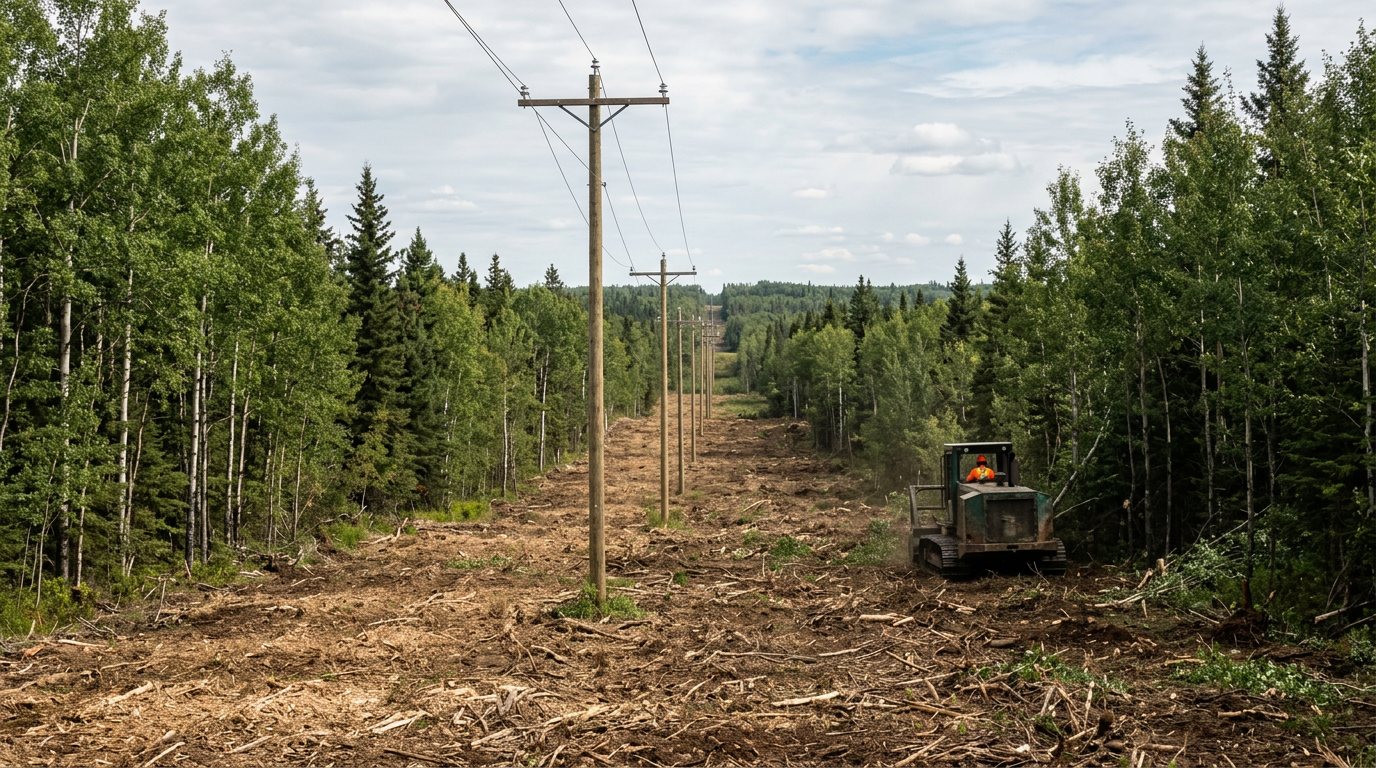
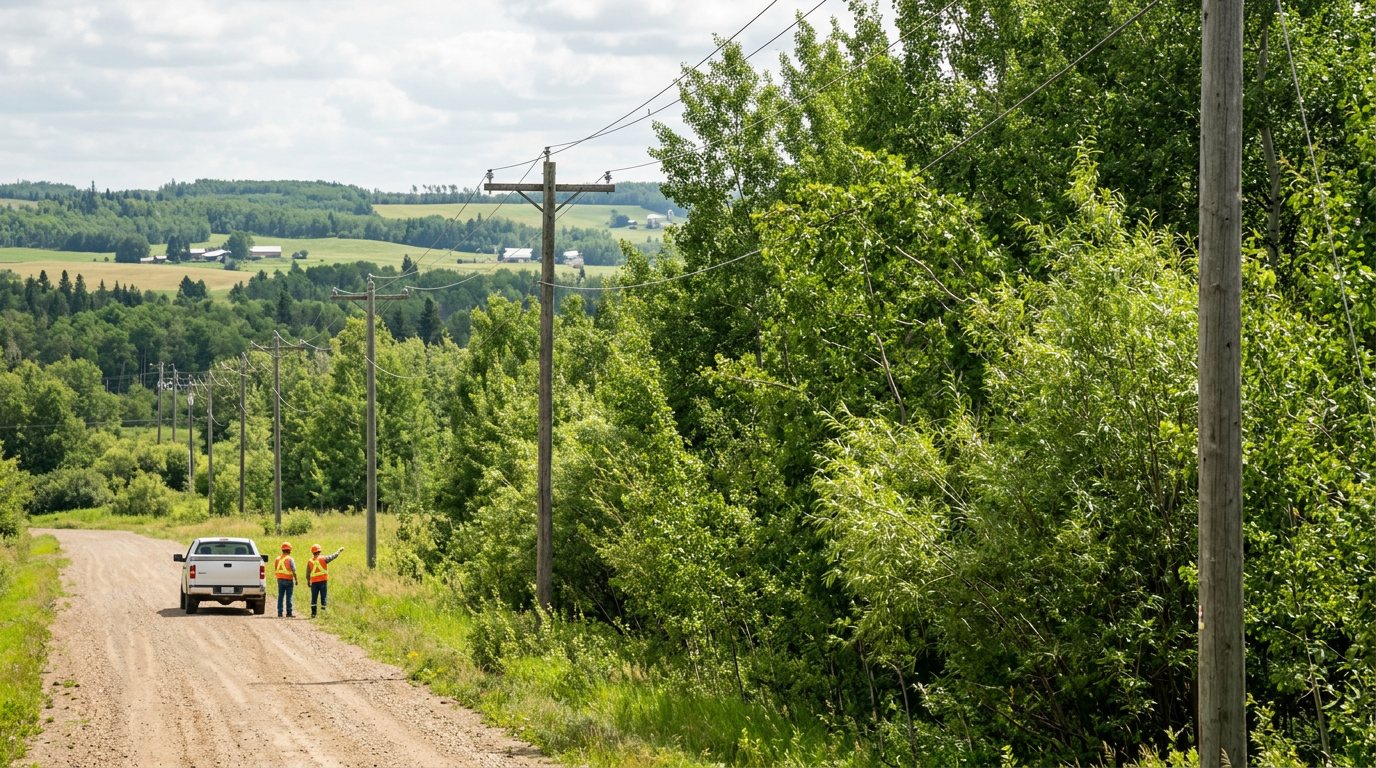
Drive any back road between Bonnyville, Cold Lake and Lac La Biche and you’ll see it: power lines running through bush that would swallow them in a few seasons if nobody looked after them. Aspen and willow grow fast here. Leave a corridor alone long enough and it’s no longer a question of trimming a few branches. It’s a clearing job. That’s the reality of power line vegetation management Alberta utilities and landowners share responsibility for.
Keeping those corridors open is one of the less glamorous parts of keeping the lights on, but it matters. In its Integrated Vegetation Management Plan, ATCO puts it plainly: trees that are too close to power lines significantly increase the risk of outages and can create a safety hazard for landowners and anyone else using the land.
We’ve been clearing utility and pipeline corridors out of Bonnyville for years. This post walks through how the work actually gets done, what the rules are, and what a utility or a landowner should expect from the crew doing it.
Why Corridors Need Regular Work
Every power line has a corridor around it, and the utility’s job is to keep vegetation far enough back that it can’t grow into the line, fall onto it, or block crews from getting to it.
The scale is bigger than most people think. ATCO alone lists 11,550 km of transmission line and 76,500 km of distribution line across Alberta in its vegetation plan. Every one of those kilometres needs checking and, sooner or later, cutting.
There are three main reasons the work can’t be skipped:
- Outages. A branch touching a line, or a tree coming down across it in a windstorm, can knock out power to a whole rural area.
- Safety. Trees near energized lines are dangerous for anyone working or playing nearby, and for the crews who eventually have to deal with them.
- Wildfire. Vegetation contact is a fire risk, and debris left on a corridor is fuel. The Government of Alberta’s FireSmart page lists Alberta Electrical Utility Wildfire Risk Best Management Practices among its resources for industry, which tells you how seriously the province takes it.
How Corridors Get Cleared: Mulching, Brushing and Pruning
ATCO’s plan describes three main ways of controlling vegetation on its corridors: brushing (also called slashing), mowing (also called mulching) and pruning. Most real projects use a mix, depending on what’s growing and where.
Mulching (Mowing)
This is the workhorse for corridor clearing. A heavy-duty tractor or excavator with a rotary or flail cutting head drives along the corridor and grinds the trees and brush where they stand. The chips stay on the ground.
According to ATCO’s plan, mulching is the preferred method where the terrain allows, especially:
- Where there are lots of target trees packed close together
- Where cutting the trees any other way would leave more debris on the ground than fire rules and fuel management standards allow
That second point is a big one in the boreal forest. Cut a dense stand of young aspen with chainsaws and you’re left with piles of slash that become fuel. Mulch it, and the material ends up as a chip layer lying flat on the ground.
Brushing (Slashing)
Brushing is the hand-crew method: chainsaws and brush saws cutting individual stems. It’s slower, but it’s very selective. It’s the right call close to streams and other sensitive spots, in scattered growth where a machine would be overkill, and for picking off individual hazard trees that could fall onto the line.
Pruning
Sometimes the answer isn’t removing a tree at all. ATCO’s plan describes trimming as a selective option used where tree removal has been turned down by a landowner. Branches are cut back to direct growth away from the line and keep the required clearance.
Where Mulching Doesn’t Fit
Mulching isn’t the answer everywhere, and a good contractor will tell you so. ATCO’s plan lists places where machine mulching generally shouldn’t be used, including:
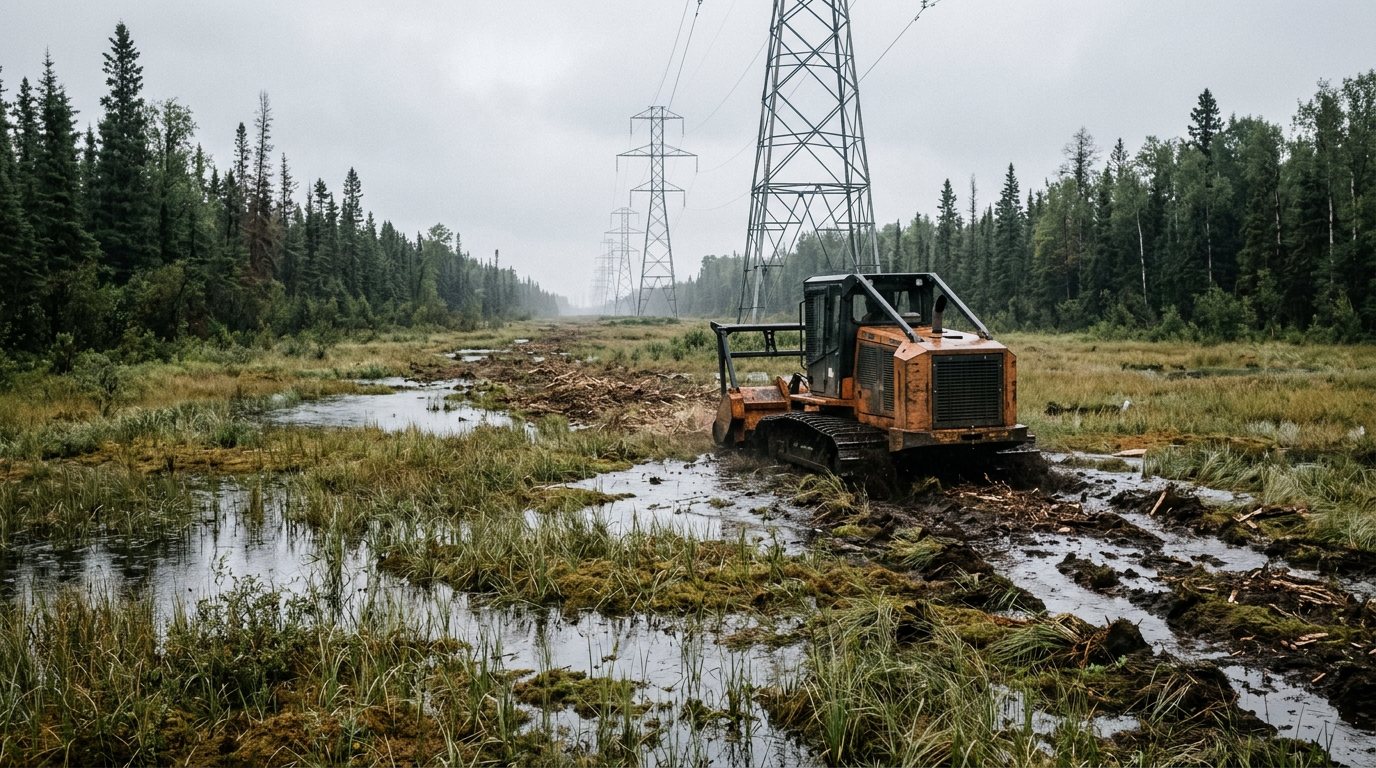
- Boggy or wet ground where the machine would cause heavy rutting and soil compaction
- Developed or busy public areas, because of the risk of flying debris
- Steep slopes that create a safety hazard for the operator
- Riparian areas along streams and wetlands
- Very large trees, where mulching big stems isn’t practical or safe
That first one is where equipment choice starts to matter in our part of the province. A lot of northeastern Alberta is muskeg, wet meadow or low ground that stays soft for much of the year.
Wet Ground, Low Ground Pressure and Timing
There are really two ways to deal with soft ground on a corridor.
Work it in winter. Frozen ground carries equipment that would sink in July. Plenty of utility and pipeline corridor work in this region gets scheduled for the frozen months for exactly that reason.
Use equipment that spreads its weight. Ground pressure is how much weight a machine puts on each square inch of the ground under its tracks. The lower it is, the less a machine rips up soft ground. Our mulchers run at 3.2 psi, which lets us work stretches that heavier machines would rut badly, and it widens the window for when the work can be done.
In practice, the best results come from planning both together: using low-ground-pressure equipment and scheduling the softest sections for when the ground is frozen.
The 7 Metre Rule and Who Can Work Near the Line
This is the part landowners most need to hear.
In Alberta, the safe working distance from an overhead power line is 7 metres unless the utility confirms otherwise. That’s from EPCOR’s guidance on working near overhead power lines, which also asks anyone needing to work closer to contact the utility first. The legal requirements sit in Part 17 of Alberta’s Occupational Health and Safety Code, which covers safe limits of approach and has a separate section for utility workers.
What that means in plain terms:
- If a tree on your property is growing into a power line, don’t cut it yourself. Call your utility or rural electrification association first. The number is on your power bill. In Saskatchewan, SaskPower has a tree trimming assessment request for exactly this.
- If you’re an employer with a crew working near lines, you need to know the line voltage and the approach distance that applies before anybody starts.
- Contractors doing corridor work for a utility work under that utility’s procedures and the OHS Code, with the training and planning that goes with it.
The tree that “just needs one branch off” is how a lot of serious injuries start. It’s not worth it.
What Utilities Look for in a Vegetation Contractor
If you manage vegetation for a utility or an REA, you already know the list. For everyone else, here’s what separates a qualified corridor contractor from someone with a mulcher and a trailer.
Safety certification. In Alberta that means a Certificate of Recognition (COR). COR is earned through an external audit of a company’s health and safety program, kept up with internal audits in the years between, and renewed with another external audit every three years, according to the Alberta Construction Safety Association.
Contractor management platforms. Most large utilities and energy companies pre-qualify contractors through platforms like ISNetworld, ComplyWorks and Avetta. Being registered and in good standing on the platform the client uses can be the difference between starting next week and starting next season.
The right machines for the ground. Horsepower and head size matter for production in dense regrowth. Ground pressure matters for whether you can work the wet stretches at all.
A plan for debris and fire risk. Mulched material should end up as a chip layer, not slash piles, and the crew should understand the wildfire rules for the season they’re working in.
Local knowledge. Knowing which roads hold up in spring, where the soft ground is and how fast the regrowth comes back in a given area saves real time and money.
For Landowners: What to Expect When a Crew Shows Up
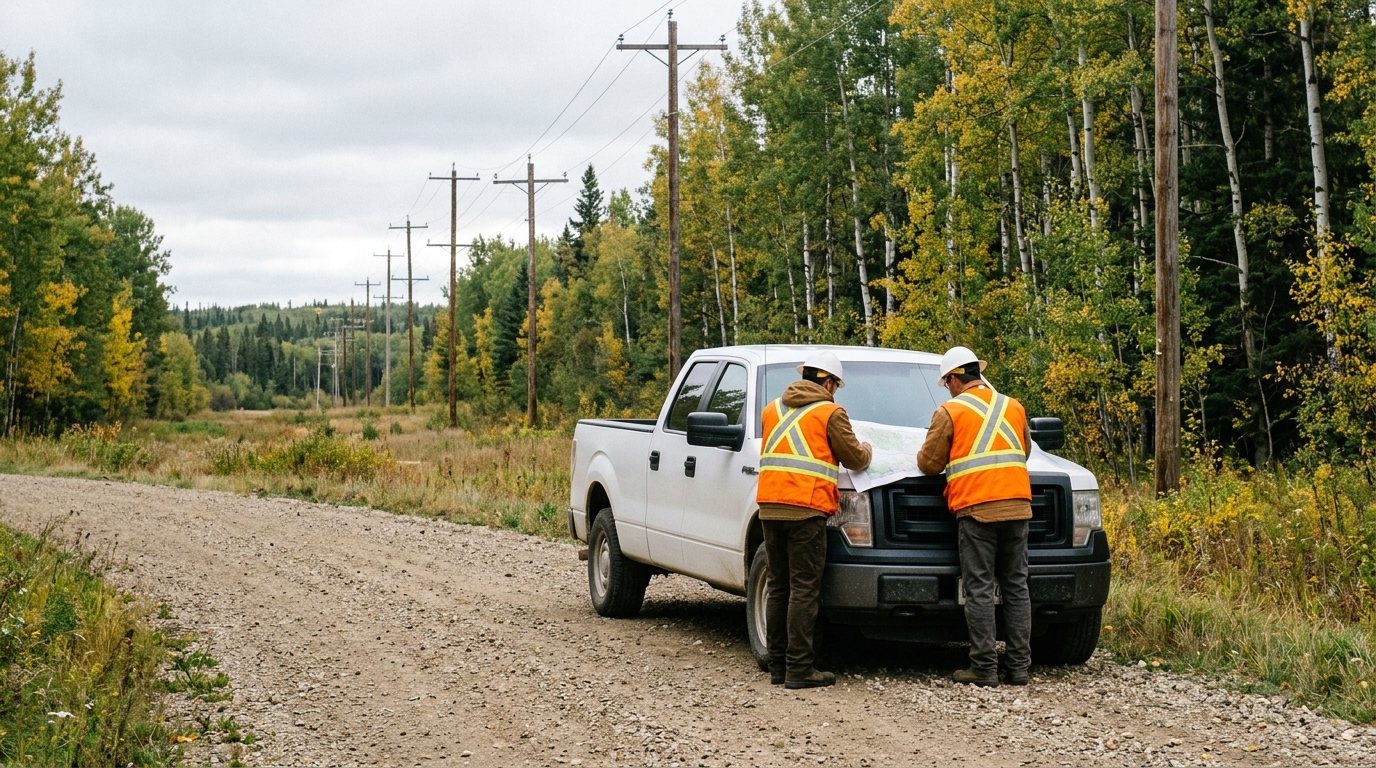
If you’ve got a power line crossing your land, you’ll probably see a vegetation crew at some point. A few things that help:
- Speak up early. If there are specific trees you care about, contact the utility before the crew arrives rather than after.
- Ask what method they’re using. Mulching leaves a chip layer; brushing leaves cut stems; pruning leaves the tree in place.
- Think about what you plant next. ATCO’s plan says the company encourages landowners to plant the right tree in the right place, which means keeping tall-growing species away from lines so the problem doesn’t come back.
FAQ
How close can I work to a power line in Alberta?
The safe working distance is 7 metres from an overhead power line unless the utility confirms otherwise. If you need to work closer, contact the utility first. The detailed rules are in Part 17 of the Alberta OHS Code.
Can I trim a tree that’s touching a power line on my property?
No. Don’t touch it. Call your utility or rural electrification association. Only trained utility workers or qualified contractors working under the utility’s procedures should deal with trees near energized lines.
What’s the difference between mulching and brushing on a power line corridor?
Mulching uses a machine with a cutting head to grind trees and brush into chips that stay on the ground. Brushing uses hand crews with chainsaws and brush saws. Mulching is usually preferred for dense growth on workable ground. Brushing suits sensitive areas, scattered growth and individual hazard trees.
Why is wet ground a problem for corridor clearing?
Heavy machines on soft ground cause rutting and soil compaction. That’s why a lot of corridor work in northeastern Alberta is done on frozen ground in winter, and why low-ground-pressure equipment is so useful here.
What certifications should a utility vegetation contractor have in Alberta?
At minimum, COR safety certification and registration on whichever contractor management platform the utility uses, such as ISNetworld, ComplyWorks or Avetta, along with the equipment and training for the specific work.
Working With Pevach Corp
Pevach Corp is based in Bonnyville and has been clearing corridors across northeastern Alberta and into Saskatchewan for years. We’re COR certified and registered on ISNetworld, ComplyWorks and Avetta. Our mulchers run 275 to 300 horsepower with a 106.9-inch cutting head and 3.2 psi ground pressure, so they can handle dense boreal regrowth and still work the soft ground this region is known for.
If you’re planning corridor work for a utility, an REA or an industrial site, or you just want an opinion on trees near a line on your property, get in touch with our Alberta team or see more about our vegetation management and brush control work.
