
October 11, 2025
How to Cut Your Own Christmas Tree in Alberta: The Free Permit, the Rules, and a Few Tips From Local Arborists
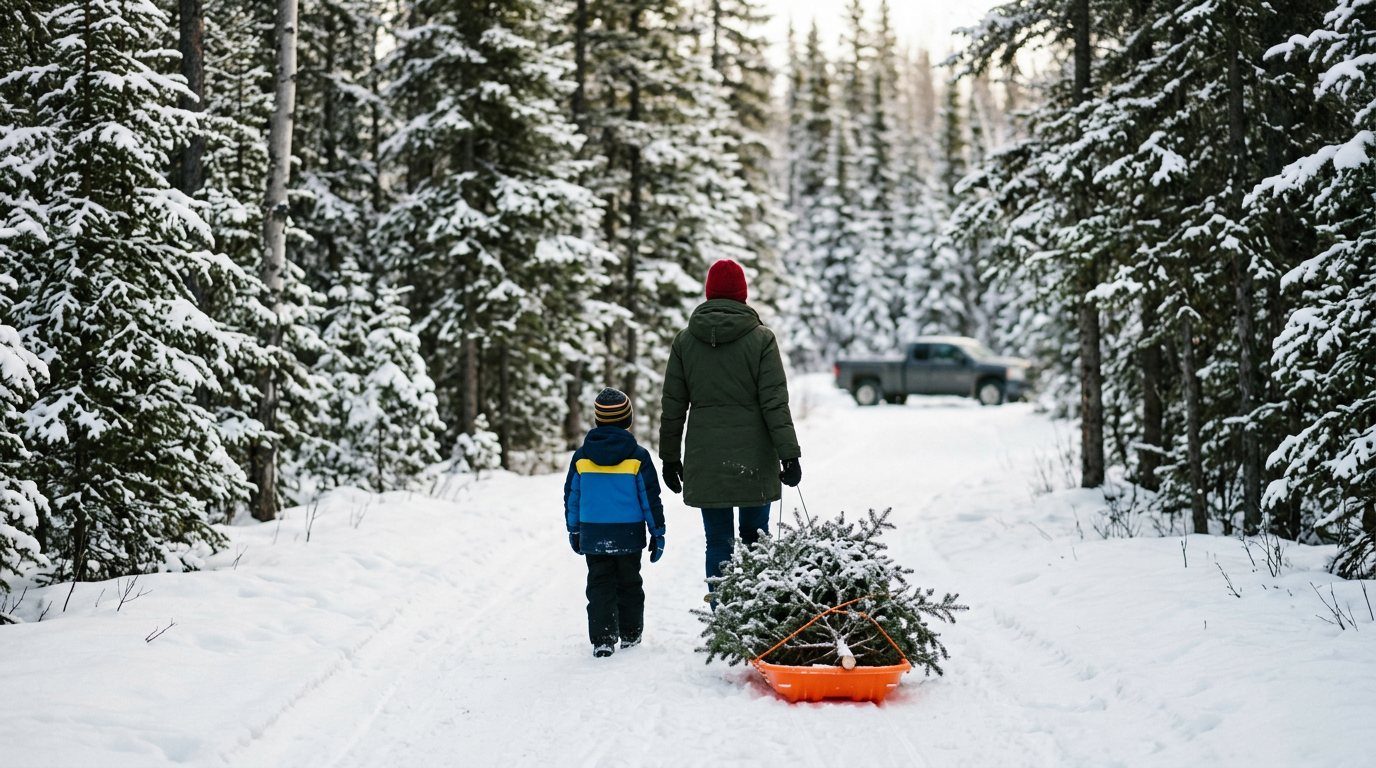
There’s something about heading out to the bush in December, picking out your own spruce and dragging it back to the truck that a tree lot just can’t match. Plenty of families around Bonnyville, Cold Lake and St. Paul have been doing it for years. All it takes is the right Christmas tree cutting permit Alberta hands out for free, and a few rules worth knowing before you go.
What a lot of people don’t realize is that cutting a tree on Crown land isn’t a free-for-all. You need a permit. The good news is that it’s free, it takes a few minutes to get, and once you know the rules there’s nothing complicated about it.
We cut, prune and clear trees for a living, so we get asked about this every year. Here’s what you need to know before you load up the saw.
Do You Really Need a Permit?
If you’re cutting on public land (Crown land) in Alberta, yes. The province covers this with a Personal Use Forest Products Permit, which also covers things like personal firewood. According to the Government of Alberta’s tree cutting permit page, these permits are free, and they’re meant for small-scale personal use only.
If you’re cutting a tree on your own property, the provincial permit doesn’t apply, but your municipality may have its own rules, especially in town. We covered that in more detail in our post on whether you need a permit to cut down a tree on your property.
And if it’s someone else’s private land, you need the owner’s permission. A Crown land permit doesn’t cover private property.
Who Can Get the Permit
The province lists three conditions on its permit page. You need to be:
- At least 18 years old
- An Alberta resident
- In good standing with the Crown when it comes to timber, grazing and land use
Kids can absolutely come along for the fun part. The permit just needs to be in an adult’s name.
How Many Trees, and How Big?
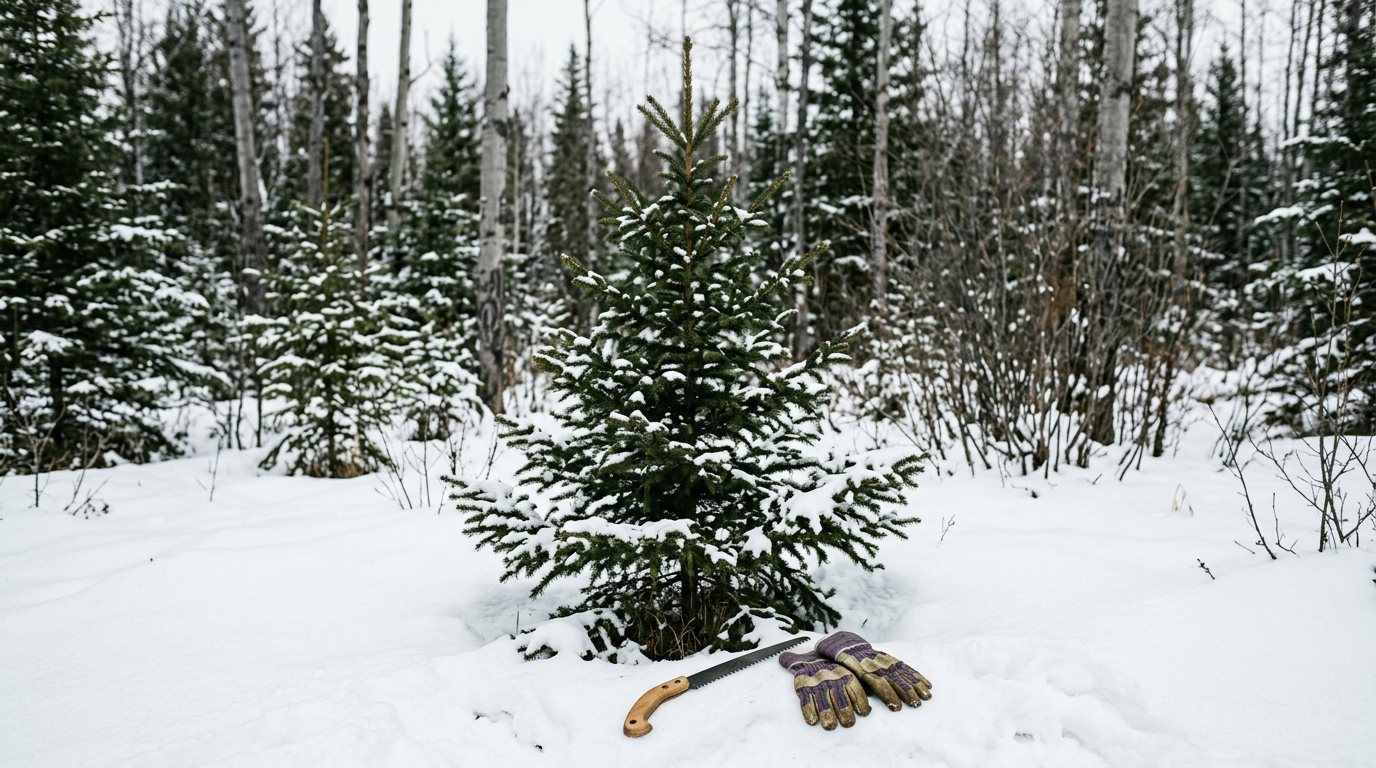
This is where people get caught. The permit lets you cut up to three Christmas trees, and each one has to be under 2.5 metres tall (about 8 feet) and no more than 15 centimetres across at the stump, per the Alberta government.
That size limit is actually helpful. A 2.5 metre tree is plenty for most living rooms once you account for the stand and the topper, and a smaller tree is a lot easier to drag out through deep snow.
A quick way to check the stump size in the field: 15 centimetres is about 6 inches. Bring a tape measure, or cut a 15 centimetre stick before you leave and hold it against the trunk. If the trunk is fatter than that where you’d cut it, move on to the next tree.
Where You Can and Can’t Cut
The permit is tied to a specific area, so you can’t just pull over anywhere. Based on the province’s rules, you cannot cut:
- Outside of the designated Forest Areas
- In provincial parks or provincial recreation areas
- In national parks
That means places like Cold Lake Provincial Park are off limits. When you apply, the permit you get is area-specific, so read it and make sure you know where your boundaries are.
If you’re in the Lakeland and want to ask about areas close to home, the Lac La Biche Forest Area office can be reached at 780-623-5388.
How to Get the Permit
You’ve got two options, per the Government of Alberta:
Online, any time. This is the easiest route. You can apply 24/7 and print the permit or keep a digital copy.
In person at a forest area office, Monday to Friday from 8:15 am to 4:30 pm, excluding holidays.
Two details matter once you have it:
- Carry it with you. The area-specific permit has to be with you the whole time you’re cutting and while you’re hauling the tree home. A screenshot on your phone works, but a paper copy in the glovebox doesn’t die in the cold.
- It expires 30 days after it’s issued. Don’t grab it in October for a mid-December trip. Get it a week or two before you plan to head out.
And no, you can’t resell the trees. This is for your own home only.
A Few Extra Permit Details Worth Knowing
Most people only need the basics above, but a few lesser-known parts of the permit are worth flagging while you’re at it.
The Personal Use Forest Products Permit isn’t just for Christmas trees. In any 30-day period, you can hold up to four separate permits, one each for firewood, Christmas trees, roundwood and transplants, so if you’re also hauling home a load of firewood this winter, that’s a separate permit, not an add-on to your tree permit. Worth noting too: collecting deadfall for firewood on site needs no permit at all; it’s only transporting it off Crown land that does.
That transplant option is worth knowing about if you’d rather move a small spruce into your yard than cut one down. The same permit framework covers transplanting up to 20 trees under 2.5 metres tall, which is handy if you’ve got a spot on the acreage that could use a living windbreak instead of a cut tree.
One restriction people don’t expect: you can’t transport mountain pine beetle-infested pine off Crown land under this permit. If a pine you’re eyeing has the telltale pitch tubes or reddish, dying needles, leave it and pick a healthy spruce or fir instead. Moving infested wood is exactly how the beetle spreads to new stands, and it’s the kind of thing we watch for in our own vegetation management work across the region.
And if you’re taking anything, firewood or a tree, across the Saskatchewan border, that needs its own export permit. The Crown land permit only covers use inside Alberta.
Picking the Right Tree
Once you’re out there, the hard part is choosing. Here’s what we look for.
Species. In northeastern Alberta you’ll mostly be looking at white spruce, black spruce, balsam fir and lodgepole or jack pine. Balsam fir smells great and has soft, flat needles that hold on well indoors. We wrote a whole post on growing and caring for balsam fir if you want to know more about it. Spruce has that classic shape and stiff branches for heavier ornaments, but the needles are sharp. Pine is the most forgiving if you have little hands helping decorate.
Shape. Trees growing in the open, along the edge of a clearing or a cutline, are usually fuller on all sides than trees growing in thick bush, which tend to be thin and lopsided from competing for light.
Health. Run your hand along a branch. If needles come off in a handful, it’s stressed or dying. Look for good green colour all the way to the inside of the tree.
Size, again. Trees always look smaller in the bush than in your living room. Measure your ceiling before you go and bring a tape measure. Remember the 2.5 metre limit includes the whole tree, not just the part you plan to keep.
Cutting It Safely
We cut trees every day, and most injuries we hear about from the public come from rushing. A few things to keep in mind:
- A sharp bow saw or folding pruning saw is all you need for a 15 centimetre trunk. A chainsaw is overkill for one Christmas tree and adds risk, especially in deep snow where footing is bad.
- Clear the snow around the base so you can see where you’re cutting and kneel comfortably.
- Cut low and level. Keep the stump short and the cut straight. It’s tidier, and the tree stands straighter in your stand.
- Watch where it falls. Even a small tree can catch you or someone nearby. Keep kids back until it’s down.
- Never cut anything near a power line. In Alberta the safe working distance from an overhead power line is 7 metres unless the utility confirms otherwise, as EPCOR explains in its guidance on working near overhead lines. If a tree you like is anywhere near a line, leave it.
A few practical things for the trip itself: tell someone where you’re going, expect spotty cell service, park well off the road so you’re not blocking forestry traffic, and bring a tarp and some rope to protect the tree on the way home.
Getting It Home and Keeping It Fresh
A tree you cut yourself is about as fresh as it gets, so it should last well if you look after it.
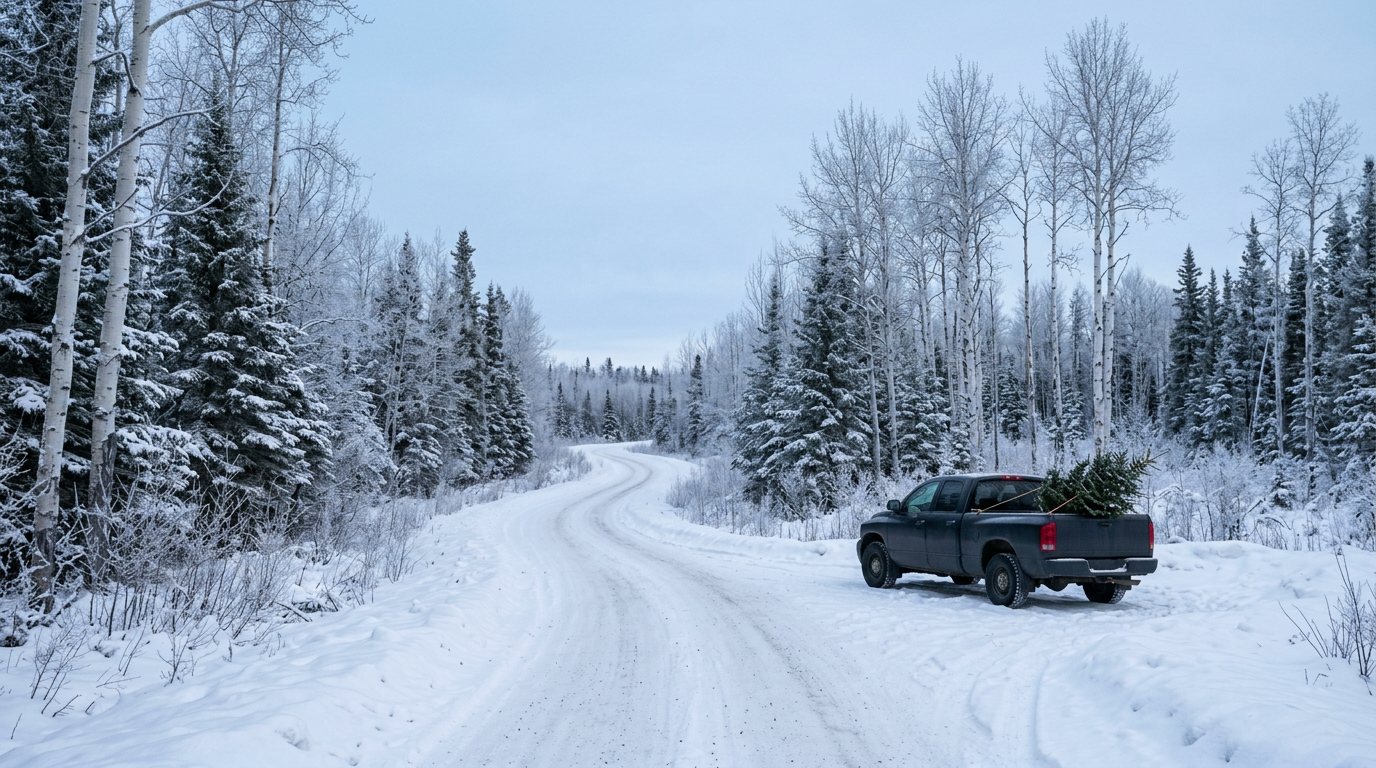
Cover it for the drive. Highway wind dries needles out fast. Wrap it in a tarp or put it in the box trunk-first.
Let it thaw gradually. If it’s frozen solid, leave it in the garage or a cool porch for a few hours before bringing it into a warm house.
Make a fresh cut. Take about 2 centimetres off the bottom of the trunk right before it goes in the stand so it can draw water.
Water, water, water. A fresh tree drinks a lot in the first few days. Check the stand every day and never let the water drop below the cut.
Keep it away from heat. Wood stoves, fireplaces, heat vents and even a sunny window all dry a tree out faster.
We go into more detail in our post on Christmas tree care and how to extend the life of your real tree.
When to Call an Arborist Instead
Cutting one small tree for your living room is a great family job. A few situations are not:
- A big spruce in your yard that you want gone before the holidays, especially one near the house, garage or power lines.
- Trees damaged by early snow or ice storms, with hanging or cracked limbs over driveways and walkways.
- Clearing brush or small trees on an acreage so you have room for a skating rink, a sledding hill or a new driveway.
That’s where a crew with the right equipment and training earns its keep. If you’re not sure, our post on when to call an arborist is a good place to start.
FAQ
Is the Alberta Christmas tree permit really free?
Yes. The Personal Use Forest Products Permit is free from the Government of Alberta. You can get it online at any time or in person at a forest area office.
How many Christmas trees can I cut with one permit?
Up to three. Each tree has to be under 2.5 metres (about 8 feet) tall and no more than 15 centimetres in diameter at the stump.
Can I cut a Christmas tree in a provincial park?
No. Cutting is not allowed in provincial parks, provincial recreation areas or national parks, and it’s only allowed within designated Forest Areas on Crown land.
How long is the permit good for?
It expires 30 days from the date it’s issued, so get it close to the day you plan to cut.
Do I need a permit to cut a tree on my own property?
Not the provincial Crown land permit. Your town, county or municipal district may have its own bylaws though, so check before you cut, especially for larger trees.
Can I sell the trees I cut?
No. The permit is for small-scale personal use only. Resale isn’t allowed.
Enjoy the Trip
Cutting your own tree is one of the best December traditions there is in this part of the province. Grab the free permit, stick to the size limits, stay well away from power lines and take your time.
And if there’s a bigger tree job waiting at home, whether that’s a spruce leaning toward the garage or brush that needs clearing on the acreage, the Pevach team in Bonnyville is happy to help. You can reach us through our Alberta contact page.
